


ISO 14644-2 Cleanroom Validation

Cleanroom validation is the documented proof that a cleanroom performs consistently according to the agreed ISO or GMP class, process conditions and intended use, not only upon completion. ISO 14644-2 focuses on periodic verification, monitoring and maintaining the validated status; a Cleanroom monitoring plan translates those requirements into daily practice. In pharmaceutical environments, these include GMP requirements and Annex 1. Below, you can read practically what you measure, when re-qualification is required and how to document validation audit-proofly.
Table of Contents
- 1From qualification to demonstrable process control
- 2Which tests show whether your cleanroom remains within specification?
- 3When do you requalify and what triggers additional validation?
- 4How to build a validation plan that remains audit-ready
- 5When do GMP Annex 1 and contamination control come into play?
- 6Frequently asked questions about cleanroom validation
- Show more...
Key takeaways
- Validation proves sustained performance; it goes beyond a one-off classification measurement.
- ISO 14644-2 requires periodic verification, monitoring and maintaining validated status; where applicable, add GMP Annex 1.
- Core checks: particle classification, airflow/air changes/flow direction, pressure differentials, HEPA integrity and room recovery.
- Requalification is risk-based and triggered by changes or unfavourable trends.
- Audit-ready validation needs clear scope, protocols, ownership and fully traceable monitoring data.
From qualification to demonstrable process control
Qualification provides evidence that a room, installation or system has been built and functions in accordance with specification. Validation is broader: it demonstrates that, under relevant conditions, the whole consistently delivers the intended result. Cleanroom validation is therefore not just about a one-off classification measurement, but about demonstrable control of contamination risks. ISO 14644 provides the technical basis for this; where GMP applies, additional requirements for documentation, risk management and process protection are added.
Which tests show whether your cleanroom remains within specification?
Which combination of verifications is needed depends on the cleanroom class, the process and the risk analysis within a stappenplan voor cleanroomvalidatie. Together, these checks provide a performance picture of the room, the installation and its use.
| Validation element | What do you check? | Why is it relevant? | When is follow-up action needed? |
|---|---|---|---|
| Particle classification | Particle concentration per measurement point | Proves that the required ISO class is achieved | In the event of an exceedance or an unfavourable trend |
| Airflow and HVAC | Air volume, air changes and, where necessary, airflow direction | Shows whether the air handling actually protects | With unstable values or abnormal behaviour |
| Pressure differentials | Pressure cascade between rooms | Prevents unwanted movement of contamination | When the pressure hierarchy is lost |
| HEPA filter integrity | Leaks or bypass in filter paths | Confirms that filtration is intact | In the event of leakage, damage or replacement |
| Room recovery performance | How quickly the room recovers after disturbance | Shows whether the cleanroom remains robust in use | With overly slow recovery or process changes |
For more on measurement methods, measurement points and interpretation during (re)validation, consult your validation protocol and risk assessment. A dedicated HEPA-filter integriteitstest confirms that filtration performance meets the specified requirements.
When do you requalify and what triggers additional validation?
Requalification is intended to confirm that the cleanroom remains within its validated state during use as well. The frequency does not follow from one fixed rule of thumb, but from risk, intensity of use, historical measurement data, deviations and the criticality of the process. Additional validation or earlier requalification is often needed after changes to HVAC, layout, filters, monitoring, process load or cleaning strategy. Trend analysis, change control and an impact assessment then substantiate whether the existing validation status is still sufficient.
How to build a validation plan that remains audit-ready
At CSI, we align validation coordination in turnkey projects with design, engineering, construction and FAT/SAT bij cleanroomoplevering, so that performance requirements and documentation align.
- Define the scope: which rooms, systems and usage situations fall within validation, including acceptance criteria and release conditions.
- Work with clear protocols: measurement points, measurement methods, responsibilities, equipment and reporting formats must be defined in advance.
- Explicitly divide ownership between engineering, maintenance, QC and QA, so that everyone works from the same starting points and data.
- Ensure that monitoring data, alarm limits, deviations, corrective actions and reassessments are fully traceable.
- Train staff in execution and interpretation; a strong protocol carries little evidential value if it is not followed consistently.
When do GMP Annex 1 and contamination control come into play?
In sterile or pharmaceutical environments, ISO 14644 alone is not enough. In that case, cleanroom validation must align with GMP, Annex 1 and a risk-based contamination control strategy. That means extra attention to microbiological control, environmental monitoring and substantiating measurement locations and frequencies from risk analysis. Smoke studies and airflow visualisation help to assess critical zones, operator influence and sampling points. Continuous or online particle counting and well-substantiated alert and action limits become especially important where product protection and aseptic processes are central.
Frequently asked questions about cleanroom validation
Below, we answer a few related questions briefly and practically, while consistently distinguishing between validation itself and adjacent topics.
Frequently asked questions
What are the ISO classes for cleanrooms?
ISO 14644-1 cleanroomclassificatie divides cleanrooms based on the maximum permitted particle concentrations in the air. Which class is needed depends on the process and the contamination risk; higher is not automatically better. Validation then demonstrates that the completed room actually achieves and maintains that chosen class. In pharmaceutical applications, GMP grades often also play a role.
What does a cleanroom cost?
The construction cost of a cleanroom is different from the cost of validation, requalification and monitoring. Important cost drivers are the required class, floor area, HVAC complexity, pressure zones, monitoring, documentation and any GMP requirements. The higher the process criticality, the more extensive the test package and supporting evidence usually become. Validation costs are therefore always linked to the intended use of the room.
What is a cleanroom in a hospital?
Hospitals apply cleanroom principles in spaces where air quality and contamination control are critical, such as certain preparation or treatment environments. Not every medical space requires the same validation approach: the requirements follow from the function, the risk and the applicable standards. As soon as a room has to function as a cleanroom or classified space, evidence of performance, a measurement strategy and periodic verification are required.
How much does a cleanroom employee earn?
This is not a question about cleanroom validation itself, but about roles in or around cleanrooms. Salary depends on the sector, level of experience, shift work, GMP responsibility and the role, such as operator, fitter, technician or QA/QC professional. For validation, the key point is this: well-trained personnel are essential for reliable execution of protocols and maintaining compliance.
Related articles
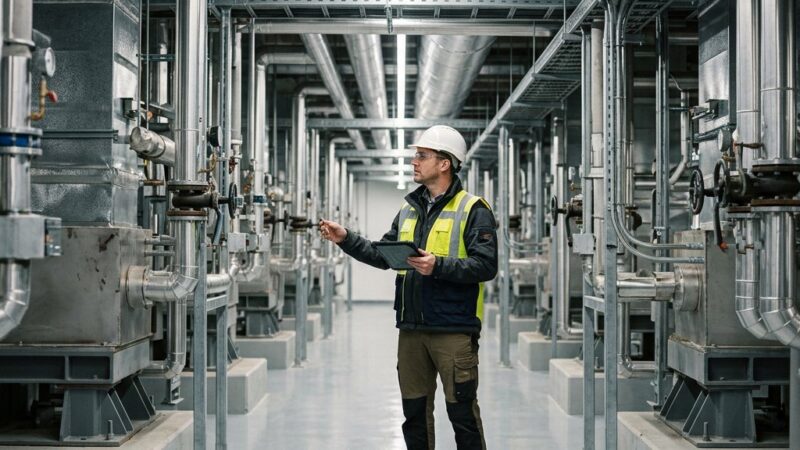
Subfab design for cleanrooms and its impact on cleanroom performance
The subfab is the technical su…
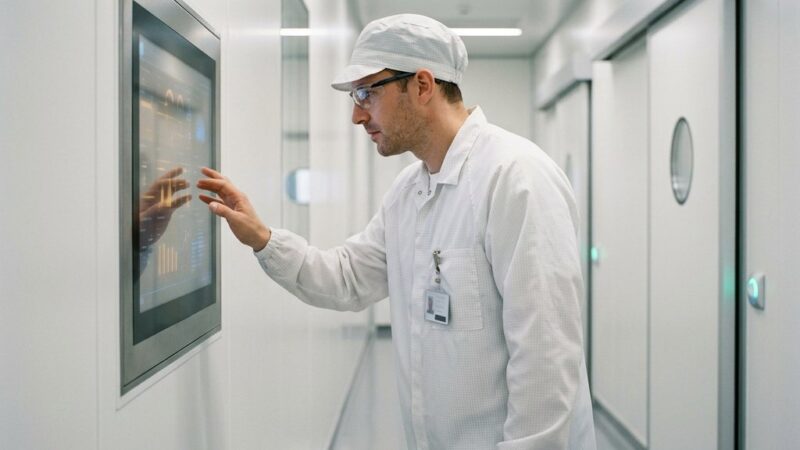
Cleanroom alarm management and escalation
A reliable alarm system in a c…
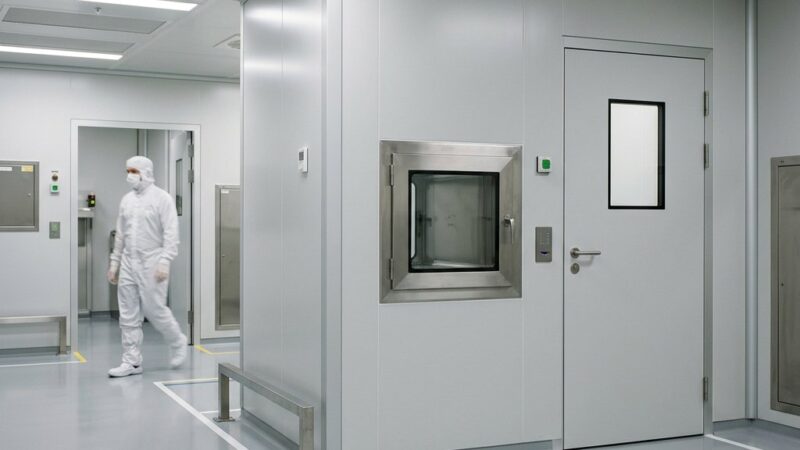
Cleanroom zonering: personeel en materiaalstromen
Cleanroom zonering is meer dan…
