


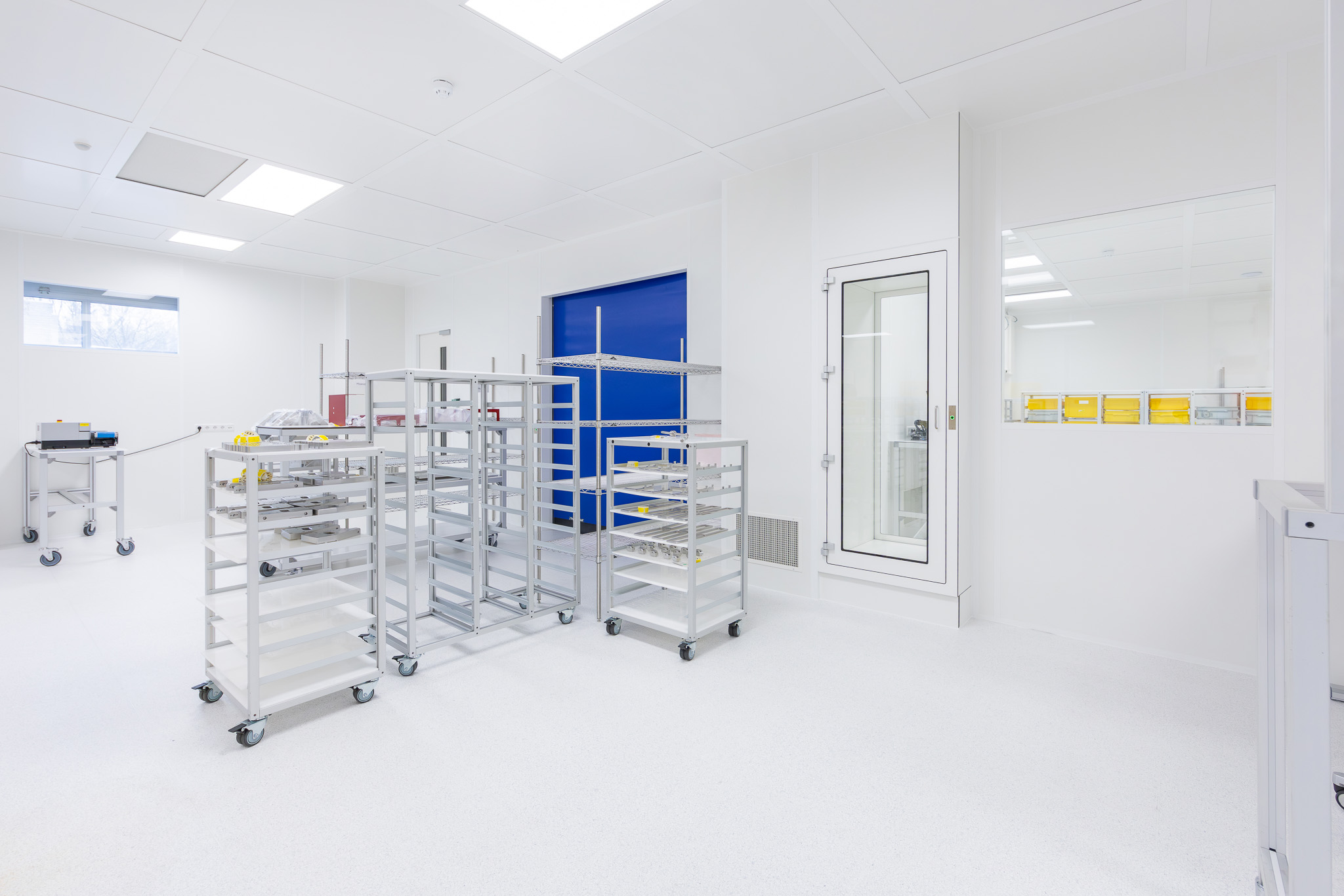
Cleaning of cleanrooms: protocol, requirements and approach

Cleanroom cleaning is not a standard cleaning task, but a controlled process to keep particles, fibers, microorganisms, and residues under control. Visual cleaning alone is not sufficient. The correct approach depends on the ISO class, the process risk, the materials used, and, where applicable, GMP requirements. A good cleaning protocol specifies what is being cleaned, how often it is done, with what means, and how results are recorded. For more background and guidelines, please see our cleanroom cleaning guidelines.
Table of Contents
Key takeaways
- Cleanroom cleaning is a controlled process; visual cleanliness is not enough.
- Adapt the protocol to ISO 14644-1/GMP, risks, materials and critical surfaces.
- Be sure to include: zoning, frequencies, resources/contact times, routing and registration.
- Work from clean to less clean and from high to low with low-lint materials.
- Borg effectiveness through monitoring, maintenance/inspection, and a design that supports cleanliness.
Why cleaning in a cleanroom is specialist work
In a cleanroom, cleaning itself can be a source of contamination. Employees, cloths, mops, packaging, and walkways directly affect the particle load in the room. Therefore, cleaning a cleanroom requires trained execution, suitable materials, and fixed work procedures. Think of cleaning from dirty to less dirty, from high to low, and using means that leave little fiber or residue behind, and of clear rules for behavior and clothing in cleanrooms. For sectors such as pharmaceuticals, medtech, high-tech, and food, this is essential for product quality, compliance, and business continuity.
What a good cleanroom cleaning protocol should cover
There is no universal protocol for every cleanroom. The content must be aligned with the classification of the space (e.g., ISO or GMP class), the process steps, and the critical contact surfaces.
Fixed parts of the protocol
- zoning and classification of the space
- cleaning frequency per surface and zone
- approved means, wipes, jokes and contact times
- dressing regulations, material requirements and running routes
- registration, deviations and possible release after cleaning
Maintain the state of the space even after cleaning with scheduled cleanroom maintenance and inspections.
Alignment with ISO 14644-1 and GMP
ISO 14644-1 describes how cleanrooms are classified based on the maximum concentration of airborne particles, from ISO class 1 to 9. That standard does not exactly specify how to clean, but it does determine the level of performance the space must support. In GMP environments, there are often additional requirements for documentation, training, traceability, and periodic review of the protocol. Specific guidelines can be found in GMP Annex 1: cleanroom requirements. The cleaning plan must therefore not only be practically feasible, but also demonstrably fit the controlled environment. Also read: Particle measurement in cleanrooms.
How cleanroom cleaning works in practice
A practical approach starts with preparation. Staffing, production planning, and critical zones determine when and in what order cleaning is performed. Employees first follow the correct gowning procedure, after which materials enter the room under controlled conditions. The cleaning then follows a fixed route, usually from high to low and from least critical to most critical, or according to the agreed-upon zoning. Walls, floors, windows, transfer systems, and contact surfaces are treated with appropriate agents. Contact time, material change frequency, and proper log recording are just as important as the cleaning procedure itself. Want to ensure effectiveness in a demonstrable way? Create a cleanroom monitoring plan, perform periodic measurements, and evaluate the results. In the event of incidents or severe contamination, follow a decontamination procedure after a cleanroom incident according to a defined step-by-by-step plan.
Cleaning starts already in the design of the cleanroom
A cleaning protocol works better when the cleanroom is technically prepared for it. Smooth closed surfaces, limited dust collectors, good connection details and logical routing, and where necessary a walkable cleanroom ceiling, make cleaning faster, safer and more consistent. For organizations that are building new, expanding or renovating facilities, therefore, cleanliness is a design requirement, not a detail left for later. Cleanroom Systems International B.V. from Drunen looks within Our working method (Design - Engineer - Build - Care) not only at classification and process, but also at maintenance, adaptability and modular wall and ceiling systems that help reduce disruption to operations.
Frequently asked questions
How clean is a cleanroom?
That depends on the required ISO class and the process in the room. A cleanroom is not only assessed on visible cleanliness, but especially on the number of particles allowed in the air and on controlling contamination risks.
What is cleanroom cleaning and how does it work?
Cleanroom cleaning is the controlled cleaning of a classified area according to fixed instructions. The execution takes place using suitable materials, trained staff and documented records, so that the area remains functioning within the agreed conditions.
What determines the frequency and cost of cleanroom cleaning?
The frequency and costs depend on the classification, the number of users, the processing load, the size of the space, the critical surfaces, and the documentation requirements. The higher the risk and the stricter the requirements, the more intensive the protocol usually is.
Why assess design and cleaning together?
Because material choice, detailing, routing and accessibility directly affect cleanliness and downtime. By considering design, construction and maintenance holistically, you avoid unnecessary sources of pollution and the protocol becomes more feasible in practice.
Related articles
Cleanroom interlock: operation, types and design considerations
A cleanroom interlock prevents…
Material Transfer in Aseptic Cleanrooms
Material and equipment transfe…
Cleanroom smoke study
A smoke study makes airflow vi…
