


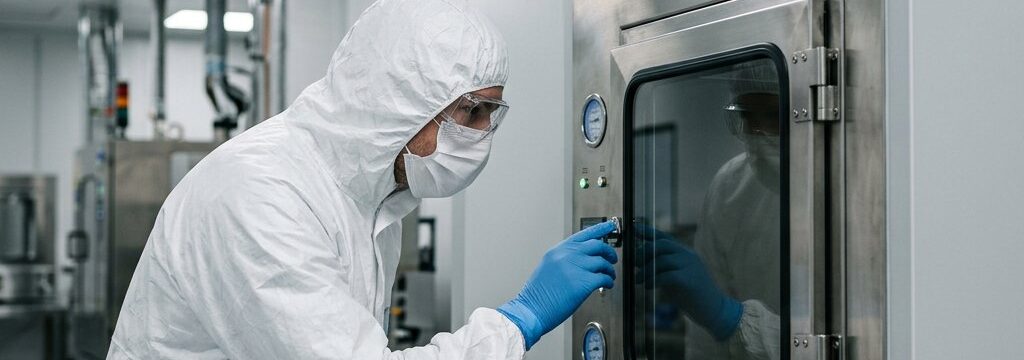
ISO 14644-7: separative devices

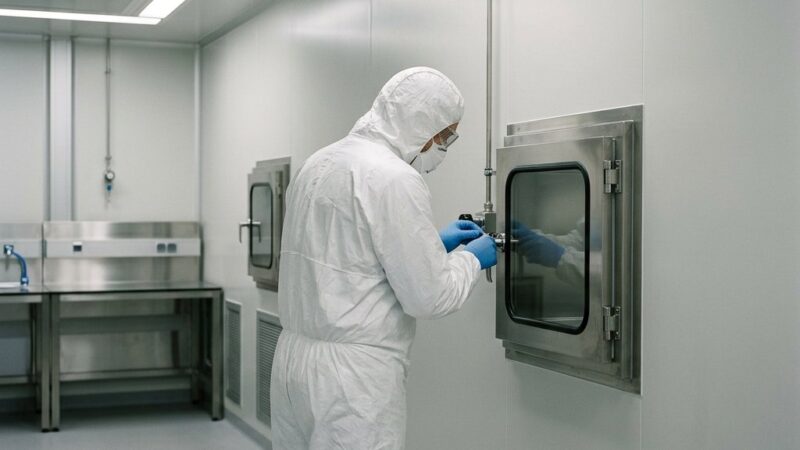
ISO 14644-7 is the part of the ISO 14644 series that covers separative devices rather than the full classification of cleanrooms: solutions that provide a barrier to separate a process, product or material locally from the surrounding environment. Examples include clean air hoods, gloveboxes, isolators, mini-environments and applications involving the Use of pass boxes and material transfer hatches. This page helps you quickly gain an accurate understanding of the standard's scope, the relevant device types and the meaning of standard codes and publication years.
Table of Contents
Key takeaways
- ISO 14644-7 addresses separative devices such as clean air hoods, gloveboxes, isolators and mini-environments, not full-room classification.
- The focus is on the device or separated process zone; whole-room classification is covered by ISO 14644-1 and monitoring/verification by ISO 14644-2.
- In practice, Part 7 serves as a framework for design, construction, installation, commissioning and verification/testing, aligned with process risk and required protection.
- Interpret ISO/EN/DIN references and publication years correctly in specifications and compliance documents.
- Separative devices must be integrated with overall cleanroom design, airflow, maintenance, testability and material flows.
When a protected process zone falls within the standard's scope
Within the series for cleanrooms and associated controlled environments, ISO 14644-7 focuses on the individual device or separated process zone, rather than the entire room as covered by ISO 14644-1 standards and classification. The standard becomes relevant in practice when local separation is needed to control contamination and provide targeted protection for the product, material, operator or process, which is closely tied to Cleanroom zoning for people and materials.
From clean air hoods to isolators: which devices are covered
| Device type | Main function | Degree of separation |
|---|---|---|
| Clean air hood | Directed clean air over a work or process zone | Relatively open; protection mainly through airflow |
| Glovebox | Carrying out operations via gloves fitted to an enclosure | High degree of separation from the external environment |
| Isolator | Closed system providing a high level of product or process protection | Very high degree of separation |
| Mini-environment | Small controlled environment around a product or equipment | Between open and closed, depending on the design |
For aseptic applications, a practical comparison is given in Isolator vs RABS in aseptic production.
What ISO 14644-7 typically covers in practice
In projects, the standard is typically used as a framework for:
- design principles, including pressure differentials and ventilation in cleanrooms, and the functional requirements of the separative device;
- construction, installation and commissioning of the chosen solution;
- verification and testing in accordance with the ISO 14644-2: monitoring and validation requirements, so that the standard is not used solely as a design document;
- alignment with process risk, the required protection and the sector context.
To translate monitoring into daily practice, see Setting up a cleanroom monitoring plan.
How to interpret standard codes and versions correctly
You may encounter references such as ISO 14644-7:2004, EN ISO 14644-7 or DIN EN ISO 14644-7. ISO refers to the international standard text. EN ISO means that the same standard has also been adopted at European level. A national publication code, such as DIN EN ISO, indicates that the version has been published by a national standards body. Publication years and national cover pages are important because they indicate which edition and publication date take precedence in specifications or compliance documentation.
Why this standard is linked to the overall cleanroom design
An isolator, glovebox or mini-environment never operates independently of the surrounding cleanroom, airflows and operating processes. ISO 14644-7 therefore addresses different questions from the classification of the room itself, but the two must be aligned. In a well-designed cleanroom, integration, maintenance, testability and material flows determine whether the solution genuinely works in practice. That is why CSI considers not just the device but the entire controlled environment in cleanroom projects, with contacting a cleanroom specialist as a logical next step.
Frequently asked questions
Related articles
What is a cleanroom?
A cleanroom is a controlled en…
Cleanroom interlock: operation, types and design considerations
A cleanroom interlock prevents…
