


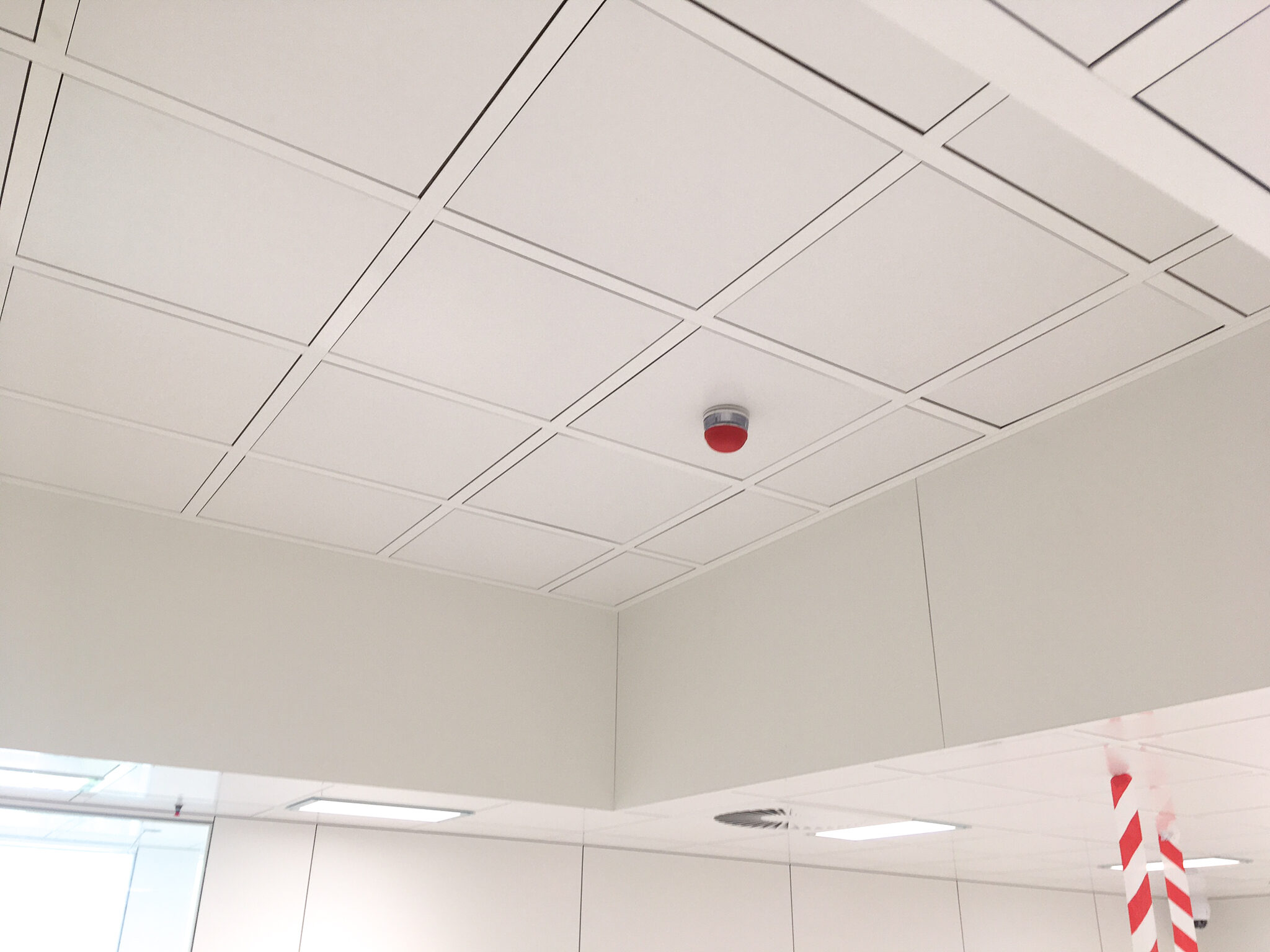
HEPA filter integrity test: explanation and test procedure

A HEPA filter integrity test checks whether the installed end filter and the seal around the filter function properly under test conditions. This is different from simply assessing the filter class or the manufacturer’s specifications. A small leak can actually undermine the air quality, process reliability, and demonstrable control of a cleanroom. Below you can read what this test exactly shows, how it differs from an efficiency test, how the execution takes place, and when further testing is necessary.
Table of Contents
- 1What this test actually shows
- 2Why even a small leak has major consequences
- 3Integrity test and efficiency test: two different guarantees
- 4This is how an integrity test from aerosol to leak detection works
- 5Standards, aerosols and measuring equipment that make a difference
- 6When retesting is necessary
- Show more...
Key takeaways
- Confirms the leak-free operation of installed HEPA filters and seals; unlike an efficiency test.
- Underpins compliance with ISO 14644-3 and, where relevant, GMP Annex 1; reduces contamination and failure risks.
- Procedure: aerosol test upstream, build reference; photometer scan of medium and edges downstream; record results.
- Re-testing after installation/replacement, work on housing/FFU/HVAC, suspected damage, and during periodic (re-)qualification.
- The particle counter does not replace the leak test; the photometer is the primary instrument; PAO is often used as a test aerosol.
What this test actually shows
With an integrity test, you demonstrate that the installed HEPA filter, as part of the system, does not exhibit any unacceptable leakage. The test focuses on local defects in the filter medium, damage caused by transport or assembly, and bypass along the frame or seal. A filter can therefore meet the specifications on paper but still fail in practice.
Why even a small leak has major consequences
In cleanrooms and other controlled environments, a limited leak can directly impact particle control, product quality, and process continuity. In pharmaceutical, medical, food, and semiconductor environments, this can lead to contamination risks, deviations, and unnecessary downtime. Therefore, this test is also important to ensure compliance with the Validation requirements according to ISO 14644-2 and – where applicable – the GMP Annex 1 guidelines, demonstrably ensuring that the critical air filtration system is functioning correctly.
Integrity test and efficiency test: two different guarantees
| Part | Efficiency test | Integrity test |
|---|---|---|
| What is being assessed? | How well the filter medium captures the relevant particles. | Whether the filter medium, frame and seal are locally leak-free after installation. |
| What risk are you taking? | Insufficient nominal filter performance. | Cracks, transport damage, assembly errors or bypass along the edge. |
| Important to remember | High efficiency does not say everything about the installation situation. | A well-assembled filter can only be attached to the system via leak tests. |
This is how an integrity test from aerosol to leak detection works
- At the upstream side, a test aerosol is introduced and first a stable reference concentration is built up.
- With a photometer, the filter surface and the entire circumference downstream are systematically scanned.
- Local measurement values are compared with the reference to identify leakage through the medium or seal.
- The test design, scan method, measurement results and any deviations are recorded in accordance with the applicable protocol.
Standards, aerosols and measuring equipment that make a difference
For cleanrooms, an integrity test of the HEPA filter is usually performed within the framework of ISO 14644-3 and, in GMP environments, according to the applicable qualification protocol. PAO or a comparable aerosol is often used, introduced with an aerosol generator, for example via a Laskin nozzle or a thermal or cold variant. The concentration must be high enough for reliable detection, but not unnecessarily taxing. The photometer is the core instrument here; a particle counter has a different measurement function and is used for particle measurement in cleanrooms, but does not replace this leak test one-to-one.
When retesting is necessary
- After installation, replacement, or re-use of a HEPA filter.
- After work on the housing, frame, terminal, ceiling structure, FFU or HVAC components.
- In case of suspected damage, deviating measurement results or incidents that could affect the filter integrity.
- During periodic qualification or requalification according to the Plan for cleanroom validation steps, Suitable for cleanroom class, process criticality and maintenance plan.
A factory certificate does not say anything about the current condition after transport, storage, assembly or use. Therefore, it is advisable to include this test in a broader policy for cleanroom projects. Cleanroom maintenance and inspection, service and validation.
Frequently asked questions
Which HEPA filter is the best?
The best HEPA filter does not exist as a general choice. The correct filter depends on the required class, the air flow rate, the allowable pressure loss, and the process environment. Therefore, do not choose only the highest efficiency specified; instead, let the filter selection align with the overall cleanroom or HVAC design and qualification requirements.
How often should you replace HEPA filters?
There is no universal replacement interval. Integrity tests, pressure drop, contamination level, operating hours and process risk together determine the right moment. Replacement is necessary when an integrity test fails, physical damage occurs, a seal leaks or resistance in the system is unacceptable.
Can you clean a HEPA filter?
A placed HEPA end filter is usually not intended to be washed or cleaned. Doing so can damage the filter media and the seal. Therefore, distinguish between cleaning the surrounding area or prefilters and assessing the HEPA filter itself through inspection, pressure drop, and integrity testing.
How long does a HEPA filter last?
The lifespan varies greatly depending on the application. Prefiltration, particle load, air volume, moisture and process conditions all have an impact. The actual remaining lifespan is therefore determined through monitoring and testing according to a standard procedure. Cleanroom monitoring plan, Not just from a fixed calendar period. In critical cleanrooms, measuring is always more reliable than replacing equipment based on gut feeling.
Related articles
Subfab design for cleanrooms and its impact on cleanroom performance
The subfab is the technical su…
Cleanroom alarm management and escalation
A reliable alarm system in a c…
Cleanroom zonering: personeel en materiaalstromen
Cleanroom zonering is meer dan…
