


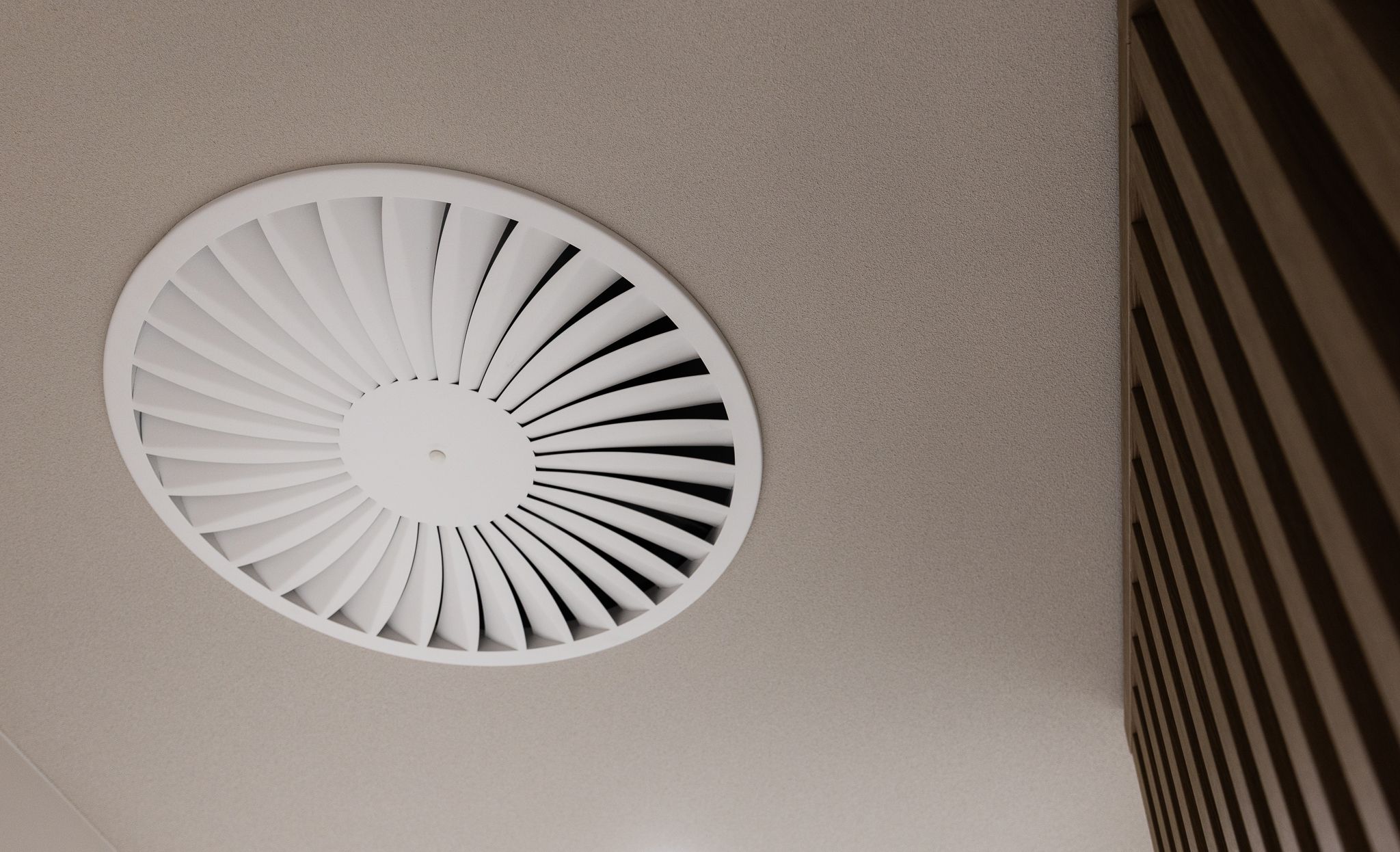
Overpressure cleanroom: pressure cascade, Pa and control

A cleanroom with overpressure prevents less clean air from flowing in from the outside. This is essential when you want to protect product, processes or critical operations against particles, microorganisms or other contamination. In practice, overpressure is more than just additional supply air: only when air volumes, door usage, air density and pressure difference measurement are well coordinated can the air flow remain reliably moving from clean to less clean. For an in-depth look at pressure hierarchies, air flows and practical guidelines, read our article on pressure difference and ventilation in cleanrooms.
Table of Contents
Key takeaways
- Overpressure keeps the air flow from clean to less clean and protects the process and product.
- Design a logical pressure cascade (e.g., phase 0 Pa, gate +5–10 Pa, cleanroom +10–20 Pa); setpoints are project-specific.
- Monitor pressure differences continuously with sensors/transmitters and set clear alarm limits; document this in a monitoring plan.
- Design for practicality: doors/gates with interlocks and an airtight construction shell; also pay attention to repair time.
- Balance supply, recirculation and discharge; validate at delivery (FAT/SAT) and manage according to ISO 14644-2.
When overpressure is the right choice
Overpressure is applied when the cleanroom itself needs to be protected from influences from adjacent areas, such as corridors, doors, or technical areas. As soon as a door opens, you want air to move out of the room rather than the other way around. That reduces the chance of contaminated air entering the room. The opposite is underpressure: in this case, you are protecting the environment from substances or particles from the room. Which strategy is appropriate depends on the process, the risk analysis, and the applicable requirements, such as the ISO 14644-1 cleanroom classification and, where relevant, the GMP Annex 1 cleanroom requirements.
Pressure cascade, Pa and pressure differential measurement
Overpressure is expressed in Pascal, abbreviated as Pa. In many cleanroom applications, the pressure difference between adjacent spaces is indicative between 5 and 20 Pa. More important than the absolute number is the logical pressure cascade: the cleanest space receives the highest pressure, with a stepwise transition to less clean zones. Always measure adjacent spaces relative to the same reference, so that the cascade remains technically correct.
| Space | Indicative water level | Purpose |
|---|---|---|
| Gang | 0 Pa | Reference area |
| Sluis | +5 to +10 Pa | Buffer between aisle and cleanroom |
| Cleanroom | +10 to +20 Pa | Protection of process and product |
It is preferable to monitor the pressure difference continuously using sensors or transmitters, linked to alarms and, if necessary, to the building management system. In this way, you can see not only the current setpoint, but also deviations caused by door movements, blockages, filter contamination, or changes in the air balance. Record this in a Cleanroom monitoring plan.
This keeps the overpressure stable in practice
Doors, gates and interlocks
Each opening disrupts the pressure ratio. Therefore, in a well-designed cleanroom, passageways have a clear hierarchy. A sluice acts as a transition zone and prevents the cleanroom from directly bordering the aisle. Depending on the logistics, you use a material sluice and pass box to maintain pressure cascades. Interlocks ensure that not multiple doors open at the same time, so that airflow does not short out. In doing so, consider not only the pressure at rest, but also the recovery time: how quickly does the space return to the desired pressure level after passage? Practically: Measuring cleanroom recovery time helps you quantify this.
Leakage and airtight construction
A pressure control system only functions properly if the structural shell is sufficiently airtight. Small gaps in window frames, electrical outlets, pipe penetrations, or inspection hatches have a direct impact on controllability, energy consumption, and pressure stability. Therefore, it is advisable to include airtightness, technical penetrations, and future modifications early in design and engineering, especially in modular cleanrooms.
What you need to pay attention to in design and management
- Tailor the pressure concept to process risk, desired classification and logistical routes.
- Balance the supply, recirculation and exhaust air, not just the supply air.
- Prevent unnecessary leakage in wall, ceiling and door details.
- Ensure permanent monitoring with clear alarm thresholds.
- Verify performance upon delivery through cleanroom validation and document management, maintenance, and any subsequent revalidation; follow the guidelines provided. ISO 14644-2: requirements for validation and monitoring.
During the commissioning phase, pressure differences and ventilation performance are monitored as part of FAT/SAT at cleanroom delivery.
Maintain long-term performance with periodic maintenance and inspection of cleanrooms.
In projects where classification, overpressure and expandability must all be met simultaneously, an integrated approach is essential. CSI translates these requirements into modular, future-proof cleanrooms within a Design - Engineer - Build - Care approach.
Frequently asked questions
What is the difference between overpressure and underpressure?
With excess pressure, air flows out as soon as a door opens. This protects the cleanroom from contamination from the outside. With a pressure deficiency, air flows inwards, preventing potentially harmful substances from leaving the room.
Where do you measure the pressure difference in a cleanroom?
Usually you measure between two adjacent spaces, for example between a cleanroom and a lock or between a lock and a corridor. For a correct pressure cascade, these measurements must be based on a consistent reference.
Is 5 to 20 Pa always sufficient?
No. This is a commonly used bandwidth, but the correct setpoint depends on door usage, leakage, air volumes, classification, and process criticality. The required pressure difference is therefore always project-specific.
How clean is a cleanroom?
The cleanliness of a cleanroom is determined by the maximum permitted concentration of particles in the air, as stipulated in ISO 14644-1. Overpressure helps protect that classification, but does not determine the class itself.
Related articles
Cleanroom interlock: operation, types and design considerations
A cleanroom interlock prevents…
Material Transfer in Aseptic Cleanrooms
Material and equipment transfe…
Cleanroom smoke study
A smoke study makes airflow vi…
